Harnessing the Power of the IB Learner Profile, ATLs, and Essential Agreements
Beyond the Frameworks
The IB Learner Profile, ATLs, and Essential Agreements are often seen as separate pillars of IB education. But what if they weren’t? What if these three elements worked together as a unified force to create not just a positive school culture, but a transformative one?
Imagine a school where every interaction, decision, and challenge reflects shared values and skills. A school where students and adults don’t just coexist—they co-create a living, evolving culture of mutual growth and accountability. This isn’t a dream; it’s the future, and it starts here.

The Synergy: Why Combine Them?
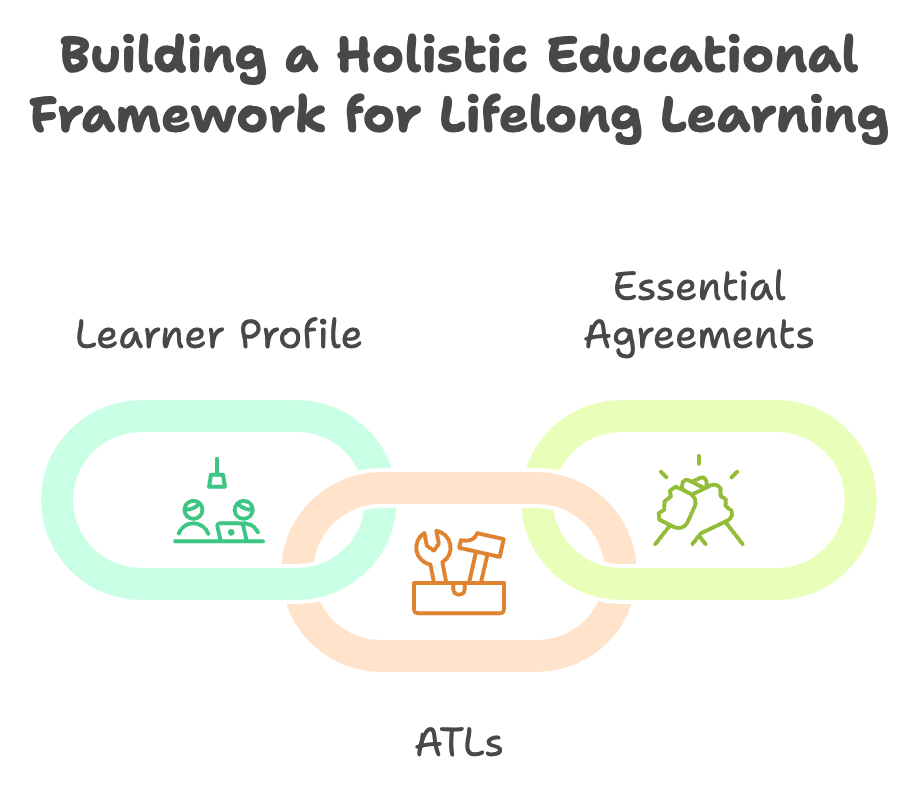
When treated in isolation, the Learner Profile, ATLs, and Essential Agreements achieve important but limited goals. However, when integrated, they form a system where each element amplifies the others, leading to outcomes far greater than the sum of their parts:
- Learner Profile: Sets the vision—who we want to be.
- ATLs: Provides the tools—how we achieve it.
- Essential Agreements: Creates the culture—the norms and commitments we share.
Together, they guide every interaction and decision, shaping behaviours, skills, and relationships into a cohesive school culture.
The Innovative Protocol
1. Essential Agreements as Culture Builders
Traditional Approach:Agreements are rules created at the start of the year.
Innovative Approach: Agreements are living commitments that evolve, connect, and inspire.
Dynamic Agreements Web:
Move beyond static posters. Create a school-wide “web” of agreements that interlink across grades, departments, and teams. For example:
- A student-created agreement about fairness in group work connects to a staff agreement on equity in grading.
- A shared agreement about listening actively applies in the classroom, staff meetings, and parent-teacher conferences.
Cross-Generational Agreements:
Pair younger and older students, or students and staff, to co-create agreements. These partnerships foster respect and mutual accountability, ensuring agreements reflect diverse perspectives.
2. The Learner Profile as the Soul of the School
Traditional Approach: The Learner Profile is a checklist for character traits.
Innovative Approach: The Learner Profile becomes the narrative thread of the school.
Narrative Mapping:
Use the Learner Profile to build a school-wide story. For example:
- Students reflect on how they were risk-takers during debates or presentations.
- Staff share moments of being open-minded when adapting teaching methods.
- These stories are displayed and shared, creating a tapestry of lived values.
Profile Ambassadors:
Assign students and staff as ambassadors for specific attributes. They design projects, mentor peers, and challenge the school community to embody their attribute in new and meaningful ways.
3. ATLs as the Tools for Transformation
Traditional Approach: ATLs are taught in isolation, as part of academic tasks.
Innovative Approach: ATLs are the glue that makes the Learner Profile and Essential Agreements actionable.
Skill Sprints:
Create short, intensive periods (e.g., “Resilience Week”) where the school focuses on practising a single ATL skill. For example:
- Teachers integrate resilience-building tasks into lessons.
- Staff model resilience by sharing how they overcome challenges.
- Students apply resilience in sports, group work, and personal reflections.
Life-Scenario Training:
Use ATLs to prepare for real-world scenarios. For instance:
- Social Skills: Role-play navigating difficult conversations in a group project.
- Self-Management: Create personalised schedules for exam preparation, then reflect on the results.
- Communication: Plan and host a community event, practising public speaking and collaboration.
The Ecosystem in Practice
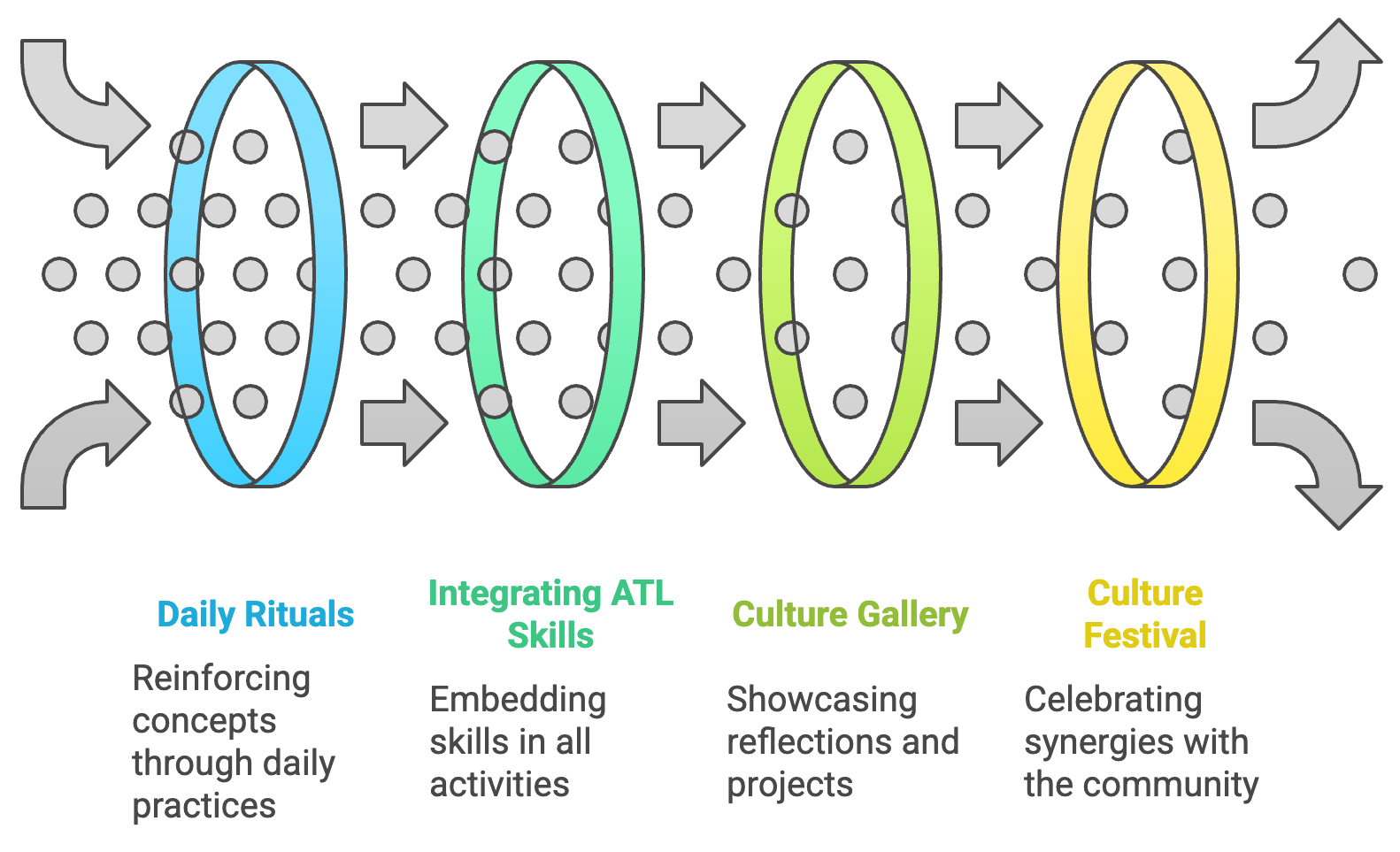
Step 1: Design the Ecosystem
- Launch with a school-wide workshop where students, staff, and parents map connections between the Learner Profile, ATLs, and Essential Agreements.
- Develop shared visuals (e.g., diagrams, videos) that make these connections visible and tangible.
Step 2: Build Daily Rituals
- Start every school day with a quick reflection or challenge based on an attribute (e.g., “How can we be principled in our work today?”).
- Use ATL skills in every meeting, lesson, and extracurricular activity, linking them to both the task at hand and the Learner Profile.
Step 3: Celebrate Synergies
- Create a “Culture Gallery” in the school where reflections, stories, and projects show how the Learner Profile, ATLs, and Essential Agreements intersect.
- Hold annual “Culture Festivals” where students and staff showcase how they’ve brought these elements to life in meaningful ways.
Why This Works
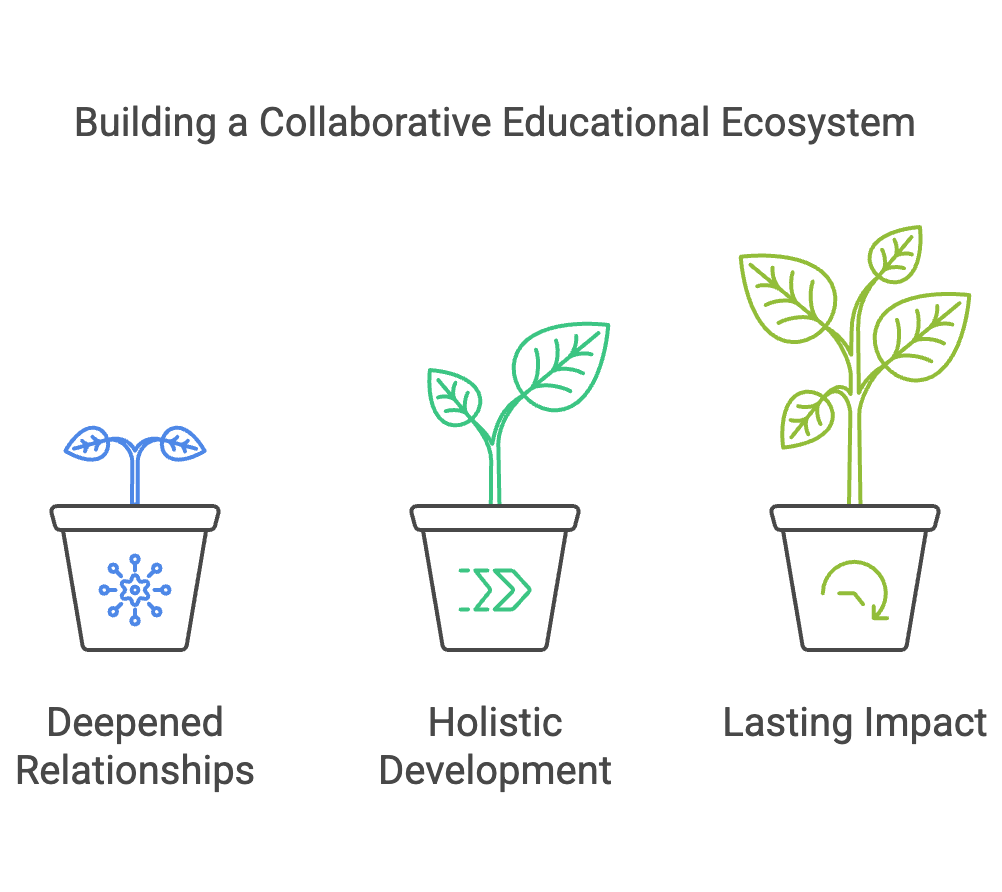
- Deepened Relationships: When students and staff co-create agreements, share stories, and reflect on skills, they build trust and empathy.
- Holistic Development: Integrating values (Learner Profile) with skills (ATLs) ensures that students and staff grow not just academically but personally.
- Lasting Impact: This approach isn’t just about today—it builds habits of reflection, collaboration, and adaptability that prepare everyone for the future.